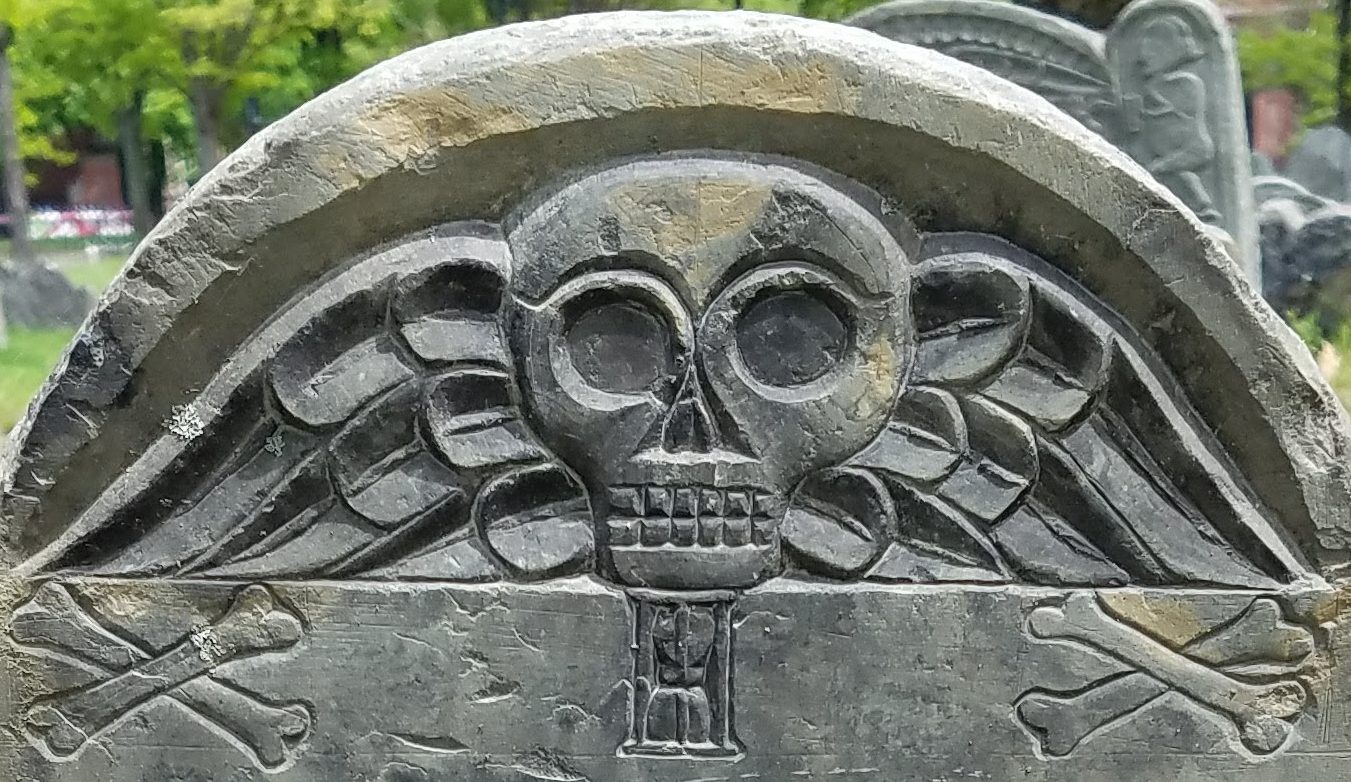

The Facebook walls of the dearly departed often function as digital gravesites where friends and family can share photos, speak to the deceased, and mourn. Who, if anyone, has access to your online tombstone and the data it contains? Opening access to the dead’s accounts has the potential for thoughtful curation, but that comes with breaches in privacy that might make some uncomfortable.
2.32 billion people access Facebook monthly as of December 2018, representing nearly a third of the world’s population. While those billions of users are mortal, their online profiles are not. Approximately 10,000 Facebook users die each day, about 428 of them each hour. Five Facebook users have died in the time it took for you to read this far in the post. In Facebook’s first 8 years alone over 30 million users died, enough to fill the world’s largest cemetery (Wadi-us-Salaam, 5 million graves) six times over. Depending on the settings of these fallen Facebookers, their pages might take on a life of its own or be memorialized in digital stone.
For grieving family and friends, a still-active Facebook account can act both as a vehicle for expressing grief and an obstacle to healing. Loved ones can post to the deceased’s wall, often speaking to them directly to share final goodbyes and words left unspoken. The page can become a hub for pictures and memories and a place to return to for milestones and anniversaries in the years to come. However automatic Facebook features, like People You Might Know and birthday reminders can lead to awkward situations when the person is deceased. If your long lost high school acquaintance doesn’t know that you kicked the bucket a few months ago, their generic ‘Happy Birthday, hope you have a great day’ post puts your loved ones in the position of having to comment back ‘Sorry to have to tell you this…’
This issue will only grow as Facebook ages. Depending on whether Facebook’s popularity maintains or plateaus, the number of dead users will outnumber living users sometime between 2065 and 2130. Even with advances in modern medicine, we will all eventually join the virtual skeleton army slowly taking over the Internet. So what’s an undead user to do?
Facebook is unique among social media platforms because it gives its living users options for their post-mortem profile. The default choice is Memorialization. Once Facebook catches wind you’ve posted your last #selfie, your account will be converted to a Memorialized account. The word ‘Remembering’ will appear next to your name, but other than that your page will look just like a living user’s. Depending on your pre-death settings, friends can post to your wall and share memories there. No one can remove or change content you posted, or post on your behalf. Like a virtual tomb, your account will be sealed and can never be logged into again, not even using your user name and password. This means your messages and other private content will follow you to the grave.
Even where private messages might reveal clues about the person’s death, Facebook has fought back against survivors who want access to that content. In Germany, high courts finally granted parents access to their deceased teenage daughter’s Facebook messages because they might have held clues about her death. The unnamed 15-year-old girl stepped in front of a train, possibly because of cyberbullying and possibly accidentally. She had already given her parents the password to the account but someone reported her death to Facebook and her page was Memorialized, making the login information useless. Facebook initially denied their request, saying that the messages were intended to be private and would also violate the privacy of still-living correspondents. Ultimately, a high court ruled that digital content is inherited by the next-of-kin, just like a paper diary, and Facebook was forced to turn over the messages.
Before your death, you can wire your account to self-destruct when you meet your demise. Under settings, simply choose General, then Manage Account, then Request Account Deletion. If Facebook learns from a close friend or family member you have died, then they will wipe your entire account out of existence. Your loved ones can always create a new memorial page to pay their respects if they want, but your day-to-day ramblings and mundane updates won’t be sealed in cyberspace for eternity. Even if you don’t choose this option in life, a close family member with appropriate identification and proof of your death can submit a request to have a deceased person’s page removed.
What should be done with your online legacy is an issue you should grapple with now. 33 people died while you read this post. You could be next! Do you want to hand over your account to a trusted friend, or scrub it from the face of the Internet forever? The choice is yours.
A third option available is to designate a legacy contact. If they accept your request, then your legacy contact will have limited access to your profile after your death and can make small changes. For example, a legacy contact can change your profile and cover pictures and write a post that will stay pinned to the top of the timeline to inform visitors of your tragic end. They can also accept friend requests and control who may post content on your wall after you die. However, your legacy contact cannot change or remove anything you posted or view your messages or other private content. If they choose, they can request to close your account entirely.
As of April 2019, Facebook announced a new feature that will be added to memorialized accounts called Tributes, where friends of the deceased can make posts to share memories and commemorate important dates. The legacy contact will have the ability to control these tribute posts, such as by deleting them, changing who can post them, and editing tags on tribute posts.
REFERENCES
Harrison, George. “Online Graveyard.” The Sun. 15 Jan 2018.
Hiscock, Michael. “Dead Facebook users will soon outnumber the living.” The Loop. 26 June 2018.
 Playing Marbles for Keeps
Leave a comment