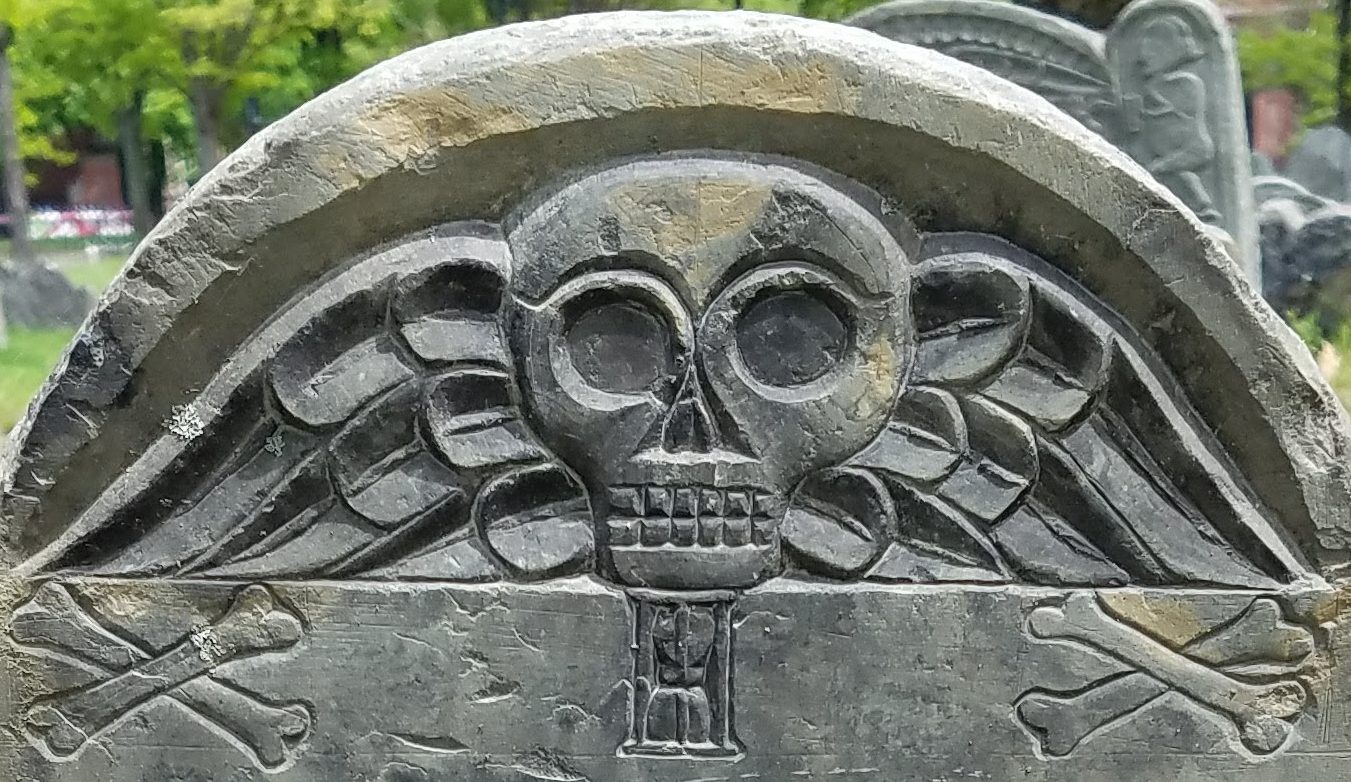

In most Western cultures, the expectation is that every person who dies should have an individual grave, marked with at least their name and years of life, that will be maintained into perpetuity. Anonymous or unmarked graves are associated with poverty and a lack of respect for the deceased. Even when the body is cremated and the ashes scattered, many cemeteries offer memorial plaques or central memorials.
Pros and Cons
Memorialization can be an important ritual for survivors, offering a location to centralize grief and the reassurance that the person will be remembered long after death. Grave markers are also important sources of genealogical and cultural information for researchers and descendants. But permanent memorialization comes with costs: monetary, environmental, and physical. How much do grave markers cost survivors, and how do the raw emotions of grief impact decision making? What is the environmental impact of quarrying, carving, and transporting slabs of stone? How do cemetery managers balance the demand for memorials with the limitations of physical space? What alternatives are available for consumers and survivors?

Currency, Quarries, and Cemeteries
According to the Funeral Consumers Alliance, survivors should expect to pay around $1,000 or more for a headstone in a traditional cemetery. This price includes the purchase of the stone, the engraving, and the installation, although some cemeteries may charge additional fees for headstones purchased through a third party. Obviously, larger and more ornate gravestones will cost more while smaller or flat to the ground markers will cost less. Unlike most funeral products that must be arranged immediately following the death, such as the casket or services, a headstone might not be purchased until some time after the death. Ideally, this might allow families to make more rational decisions about costs and products.
The most common material for headstones today is granite, although marble and bronze are also common choices. Granite is a hard stone that holds engraving for a long time, and its weight makes it sturdy and difficult to steal. On the other hand, it is fuel-intensive to transport and install. Granite mines are also very environmentally hazardous; the mining process involves extensive deforestation and blasting of the site which creates air and water pollution. Granite quarry workers have very high rates of respiratory problems and hearing loss, and local communities sometimes face contamination of drinking water and excessive noise pollution.
While Western culture holds an expectation that a grave site is forever the reality is that cemeteries have physical limitations and must make choices when it comes to space. Community mausoleums can help ease the burden by increasing the number of burials in the same footprint of space, and some burial plots can be dug ‘double-deep’ to allow two caskets to be buried one on top of the other. Cemeteries laid out in a ‘memorial lawn’ style require all markers to be flat to the ground and the same size. This strategy makes mowing much easier and also increases the number of graves that can be laid out, but imposes limits on the families in terms of letters and lines of text.

The Need for Memorials
Despite these concerns, personal grave markers are still the status quo in most cultures that practice burial. Styles may range from simple and uniform to ornate and extravagant, but a grave marker is a symbol of respect for the deceased. Even when the body is hidden under the ground and the memory of the individual has faded, a grave marker serves as a lasting tribute to their memory, reminding others that this person once lived and was loved. Only the unclaimed or destitute have to suffer the indignity of an unmarked grave. For much of human history, only the rich elite could afford to mark their graves, at least in any way that endured through the ages, so it stands to reason that this would be the connotation most prevalent in our minds today. In addition, knowing that one’s grave will be marked with one’s name carved in stone can be a comfort against fears of mortality. Knowing that centuries later, visitors will see your name is a way of assuaging anxieties that one’s identity will be erased after death. In this way, a grave marker is literally one’s mark on the earth.
Of course, some cultures that practice burial still routinely eschew personal grave markers. In early New England, Puritan colonists did not mark graves because they associated grave markers with the excesses and idolatry they perceived in Catholicism. Likewise, early Quakers or Friends saw grave markers as a way of elevating some people over others which they avoided. Even today, certain Inuit tribes, especially in Greenland, do not mark graves with names because only the living require names and to carve the name of the dead is to tie their soul to the earth.

Meaningful Alternatives
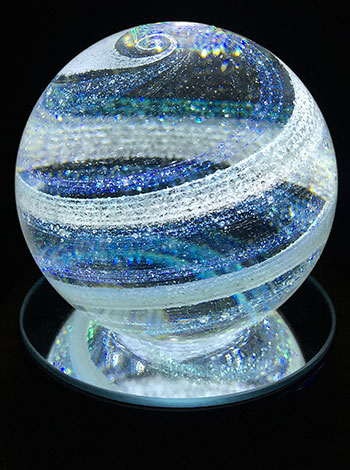
Recent movements towards environmentally and socially responsible death choices, as well as death acceptance, are making personalized markers less of a requirement in the eyes of mainstream Western culture. Cremation is experiencing a rise in popularity, and with cremation comes greater flexibility in final disposition. Keeping a loved one’s intact corpse on the mantle is much less practical than a tasteful urn of cremated remains. Cremated remains can also be scattered, incorporated into an artificial reef, made into glass jewelry, or even mixed into tattoo ink or pressed into a vinyl record. Sometimes the decedent’s name and dates will still be added to a family monument or buried in a traditional burial plot with a marker, but it is easier than before to avoid the added hassle and expense that comes with a ground burial. Body donation might be another option that avoids the cemetery altogether


Harry and Carole Knight, son and daughter of Chief Petty Officer Robert C. Knight, scatter his ashes above the waters at the USS Utah Memorial during an ash scattering ceremony held in his honor. Knight was assigned to an aviation squadron on Marine Corps Base Kaneohe Bay during the 1941 Japanese attacks on Pearl Harbor. (U.S. Navy photo by Mass Communication Specialist 2nd Class Tiarra Fulgham/Released)
Natural or green burials are also rising in popularity along with their own practices for the memorialization of the grave space. Generally speaking, natural burials are burials of the unembalmed body in a biodegradable container or shroud in an undeveloped, natural setting such as a forest or meadow. Depending on the rules of the organization that manages the natural cemetery, different rules might apply. Some sites allow native fieldstone to be engraved as a burial marker, or a plaque to be placed on a tree. Others use numbered metal stakes to mark the location of graves or only GPS coordinates. Another option is to have a communal monument or wall of names to commemorate those buried on the property without marking individual sites. The philosophy is to limit disruptions to the natural environment and the use of resources as much as possible, so quarrying, engraving, and hauling in a massive granite tombstone with a laser-etched photo of the deceased would be counterproductive.

For those who want to lessen their impact on the environment but still be buried in a mainstream cemetery, green burial is offered by some burial grounds. Green burial, like natural burial, uses biodegradable burial containers and forgoes embalming but takes place in an organized cemetery. Some historic cemeteries such as Mount Auburn in Massachusetts and Swan Point in Rhode Island are using green burial to increase grave space available in their historic centers. Green burials do not require a bulky concrete grave vault, so they can be positioned in unused space between centuries-old family plots. Families get to bury their loved ones in a historically significant and beautiful space, but the trade-off is that no new markers are allowed because they alter the appearance of the burial ground. For some, the compromise is worth it because it may be the only green option available near urban centers.
Perhaps as more people learn about cremation, body donation, and natural/green burial, personalized markers will be perceived not as a requirement of status and memory but as just another option in death care. With more choices available, maybe some will find a work of art or space in nature as a more meaningful way to preserve the impression a loved one made on the world.
References
“Green Burial, An Environmentally Friendly Choice.” 2019. Funeral Consumers Alliance. https://funerals.org/?consumers=green-burial
“Traditional Burial.” 2019. Funeral Consumers Alliance. https://funerals.org/?consumers=earth-burial-tradition-simplicity
“Best Materials for Gravestones.” 2019. International Southern Cemetery Gravestones Association. http://www.iscga.org/best-materials-for-gravestones.html
“How to Buy a Memorial.” 2019. Monument Builders of North America. https://monumentbuilders.org/consumers_how_to_buy_a_memorial.php
Harris, Mark. 2008. Grave Matters: A Journey Through the Modern Funeral Industry to a Natural Way of Burial. Scribner, NY.
Bhaskara Reddy. M, Vijaya & Yasobant, Sandul & Boondesh, Nantawit. (2017). Occupational and Environmental Impacts of Granite Quarry Activities in Chittoor District of Andhra Pradesh, India. SSRN Electronic Journal. 10.2139/ssrn.3015128.
 Playing Marbles for Keeps
Leave a comment