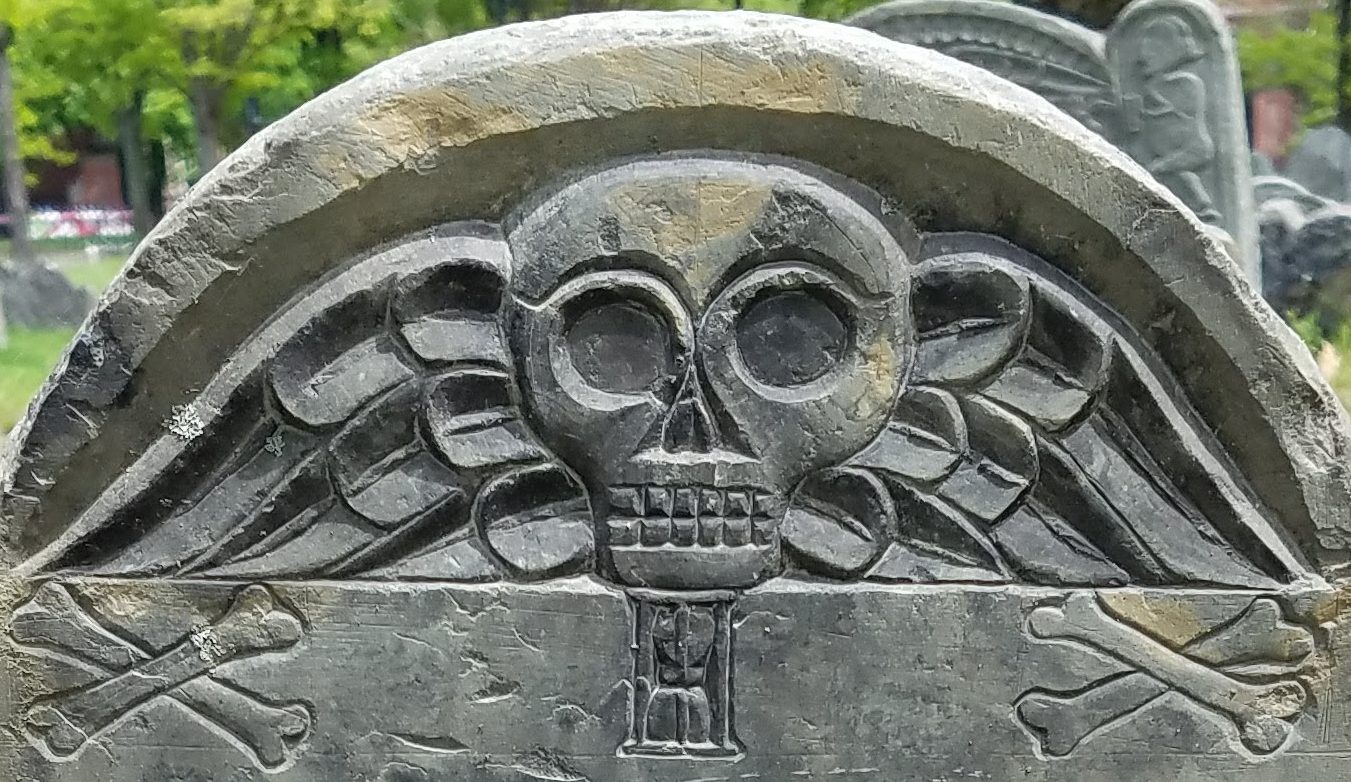

October is the best month of the year to be a taphophile in the United States. For 31 glorious days, exploring cemeteries and fawning over grave art transforms from a creepy pastime to a festive way to celebrate the season. Even out in the real world, plastic skeletons burst from suburban lawns in front of styrofoam gravestones. Shuttered big box stores rise from the grave as seasonal Halloween decoration stores, stocked with all the anatomically impossible skeleton animals and pumpkin-scented candles your heart could ever desire.


But October does not have a monopoly in the global arena of cemetery-centric holidays. Around the world, people gather in burial places to honor their dead in a variety of traditions.
Mayanakollai Festival – India
In the Indian state of Tamil Nadu, a unique tradition called the ‘pillaging of the graveyard’ occurs in February or March. The origins of this holiday date back before 500 BCE and the festivities include a procession from the temple of the goddess Angala Parameswari to the graveyard, led by the goddess herself. She is accompanied by revelers carrying tridents or spears who are dressed extravagantly in colorful costumes that include long artificial tongues and real animal entrails. At the burial ground, the festival centers around an enormous statue of the goddess where she is offered rice and blood.

The entire holiday is a recreation of a Hindu legend in which the goddess Angala Parameswari was asked by Shiva, the Destroyer, to kill a Rakshasa, a humanoid demon. The Rakshasa tried to hide in a cemetery but the goddess kept consuming corpses until she found and killed him.
Ching Ming/Qingming Festival – China
The ‘Day of Clear Brightness’ or Grave Sweeping Day falls in early April and is celebrated by many Chinese people around the world. While Halloween has its roots in the autumn harvest festival and incorporates themes of death and decay, Qingming is a part of springtime celebrations and is part of a time of renewal and new growth. As families enjoy the warming weather, they remember their ancestors with some spring cleaning and gifts. Families pull weeds and clear away dirt and debris from the gravesite and hang willow branches to ward off evil spirits. Food and drink are offered to the ancestors, and paper effigies of other gifts from money to luxury cars and designer handbags are burned so that the dead might enjoy them in the afterlife. It is essential that the living maintain a positive relationship with the ancestors because the dead can intercede positively or negatively in their affairs.
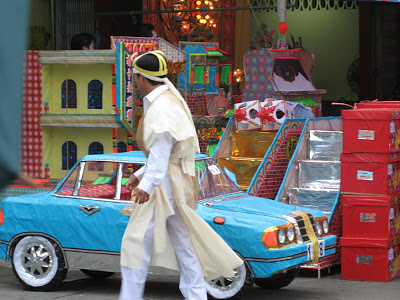
Paper effigies of gifts available for sale in Hong Kong. Photo courtesy of Mister Bijou blog. 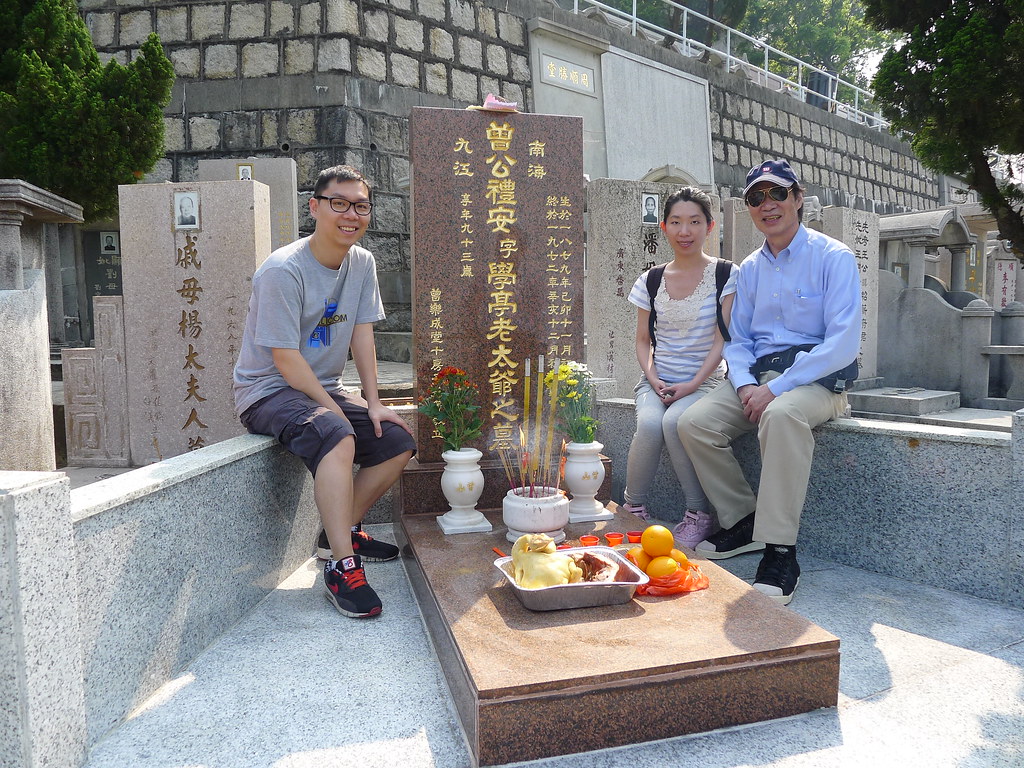
A family poses at the family grave.
“P1000232” by esmondtsang is licensed under CC BY-NC-SA 2.0
Día de los Muertos – Mexico and Latin America
El Día de los Muertos, or the Day of the Dead, is experiencing a huge surge in popularity in the United States, partially driven by the Disney/Pixar movie Coco. Everywhere you turn, bright sugar skulls decorate products from water bottles to leggings. Even Barbie has tried to get in on the magic with a face-painted special edition doll.
But aside from the corporate sponsorship, the Day of the Dead blends two very distinct cultures into a beautiful and bright celebration of life and death. Before the arrival of the conquistadores, the Aztecs, Toltecs, and other indigenous cultures participated in a month-long celebration led by the goddess Mictēcacihuātl, “The Lady of the Dead.” During this festival, the spirits of the dead could come to earth to visit their living loved ones and they were met with feasts and dancing. When Catholic missionaries arrived, they attempted to wipe out this and all other traditional customs and replace it with All Saint’s Day and All Soul’s Day. These holy days in the Catholic calendar are dedicated to prayer and remembrance for the holy saints as well as all departed souls and fall on November 1st and 2nd.
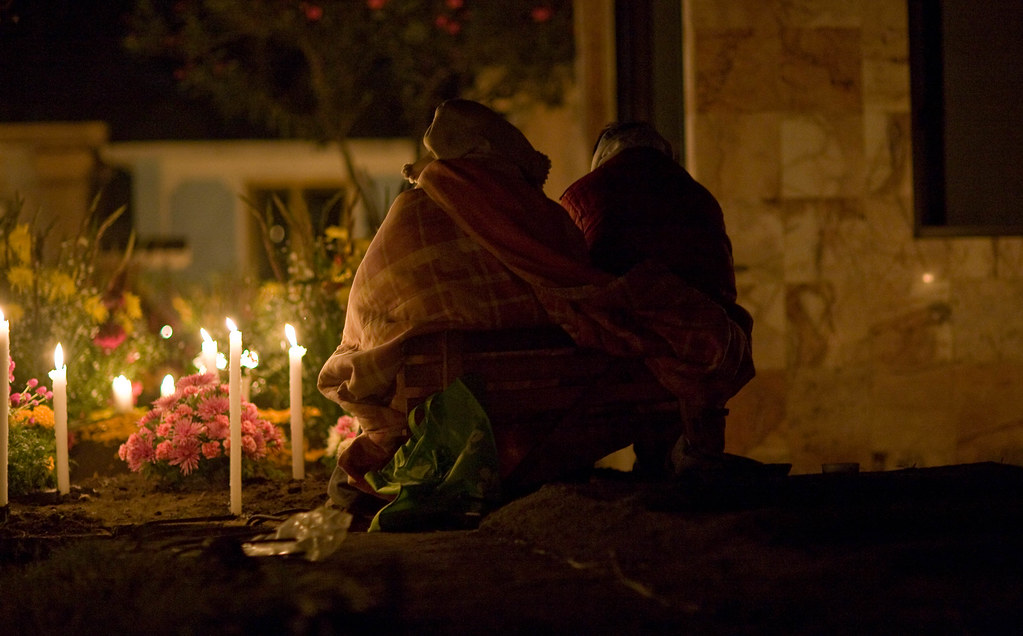


The convergence of these two cultures has given rise to the modern Día de Muertos. For many who celebrate the holiday, especially in Mexico, the festival is a joyous reunion with the spirits of the dead and an opportunity to use humor to recognize death. Facepaint, costumes, parades, and food are common and families spend weeks preparing altars in their homes and businesses. The family graves are also cleaned and decorated with candles and orange marigold petals, and families will often stay in the cemetery all night with music and banquets of food to share memories and spend time together.
Famadihana – Madagascar
Every 5-7 years, the spirit of an ancestor will appear to an elder member of the community to ask for new burial clothes. After consulting with the local astrologer, a date will be set for a unique and deeply meaningful two-day celebration known as “the turning of the bones.” In Malagasy culture, a person is not fully dead until they have completely decomposed including their bones. The Famadihana is a vital ritual to reunite with members of the community who occupy the tombs, share family news, ask for intercessions, and celebrate together.


Far-flung family members will travel for days on foot to the ancestral tomb. At the start of the ceremony, the tombs are opened and the old, dirty silk burial shrouds are carefully peeled away from the remains before they are lovingly re-wrapped in fresh cloths. This type of white silk is only used for the dead, never for garments for the living. The family members sing and dance in a counterclockwise circle with the bundles of bones, representing the new cycle of life and death. For a joyous day, families are made whole and everyone shares in the celebrations. Before night falls, the bundles are carefully returned to their shelves inside of the tomb, headfirst to represent rebirth into the world of the dead and upside down to represent the completed cycle. Gifts of money and alcohol are placed with them before the tomb is sealed again to await the next festival.
Celebrate in the Cemetery All Year Long
Whether you are there to honor your ancestors with offerings or to freshen up their burial clothes, visiting the burial place of loved ones can be a deeply meaningful ritual that keeps their presence alive. Even just visiting the grave site from time to time to talk, share stories, or retell favorite memories can be rewarding. Even if your culture or family does not participate in these rituals, you don’t need to consult your local astrologer or wait for the next holy day to stroll through your local burial ground and appreciate the beauty and peace you will find there!
References
Hessler, Peter. “Restless spirits.” National geographic 217.1 (2010): 108-119.
Fercility. “QingMing festival .” China Highlights (5 Sept 2019)
Dignity Memorial. “Qingming festival.” (n.d.)
Indian Columbus. “Mayana kollai.” (22 May 2018).
Ward, Logan. “Top 10 things to know about the day of the dead.” National Geographic (26 Oct 2017).
 Playing Marbles for Keeps
Leave a comment